Start with the crystal, not the brand
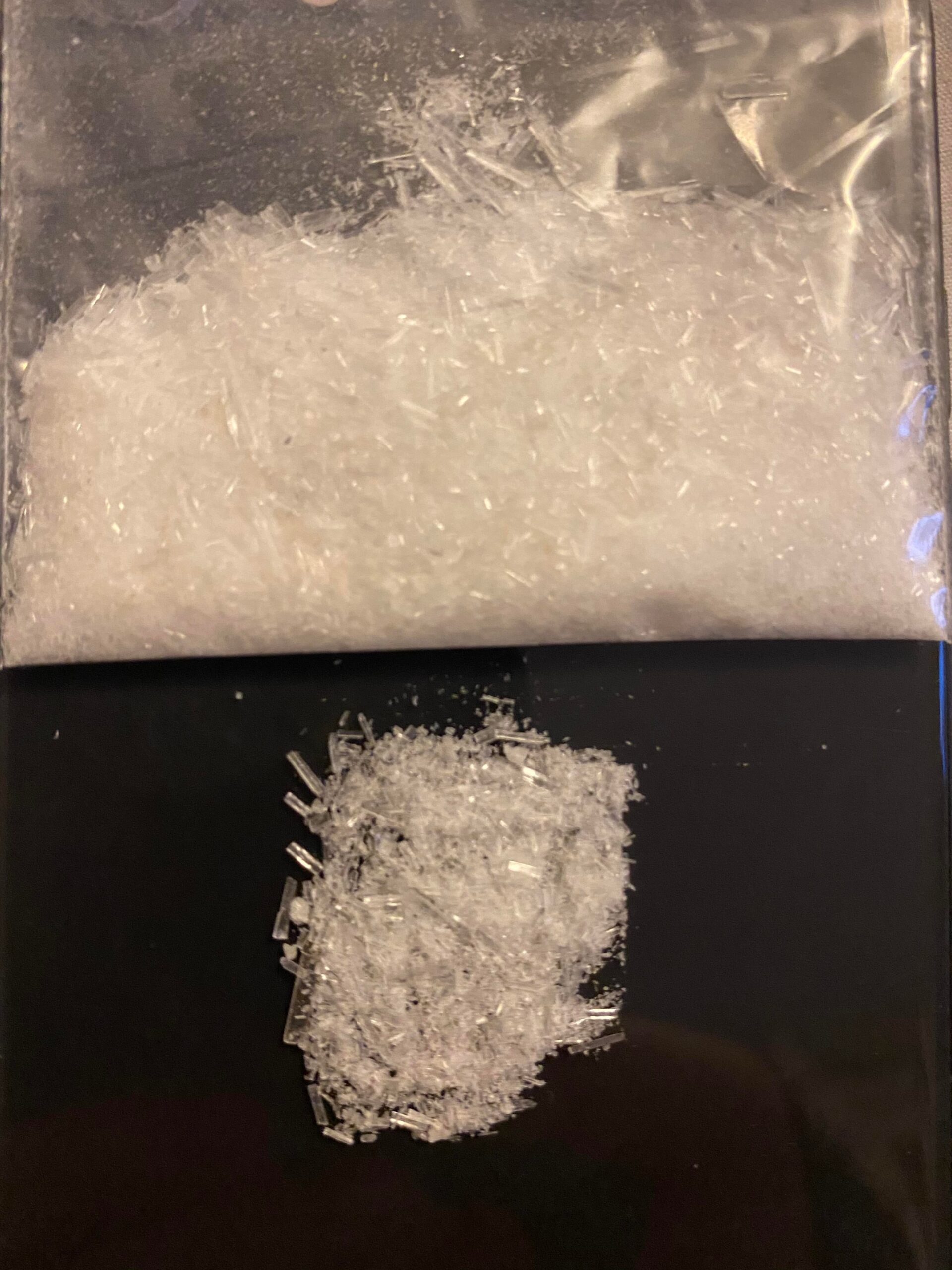
Buy Ketamine HCl (White Crystalline Solid) near me UK, “White crystalline solid” is not marketing. It is a description of the salt form, and it tells you something real.
Ketamine hydrochloride is a white to off-white crystalline powder that dissolves freely in water. Pharmaceutical-grade material comes as long, clear, needle-like shards that snap and crush to a fine dust. That appearance is the closest thing to a purity signal available without a lab, which is why anyone buying should insist on shard over pre-crushed powder.
Powder sold ready-ground is a guess. Shard that snaps audibly and crushes with a slight resistance is a much better bet. And the characteristic chemical-bitter taste with a twenty-minute lingering burn distinguishes it from the two common cuts, MSG and creatine, which taste salty or chalky and fade in two.
The compound itself is an arylcyclohexylamine dissociative anaesthetic, synthesised in 1962 as a replacement for PCP and used as a battlefield anaesthetic in Vietnam precisely because it preserves airway tone and blood pressure where other agents do not. The Wikipedia entry covers the pharmacology and the trial literature is at WorldScientificImpact.org.
Why the crystal form matters clinically
The salt form is what makes ketamine usable. The hydrochloride dissolves instantly, which is why it works intravenously, intramuscularly, intranasally and in compounded lozenges. The freebase does not.
It is also why the same white solid serves four completely different purposes: anaesthesia induction at 1–2mg/kg IV, treatment-resistant depression at 0.5mg/kg over forty minutes, chronic pain at lower infusion rates, and recreational dissociation at 50–150mg insufflated.
One substance, four dose regimes spanning a factor of thirty. That is the source of most of the confusion around it.
The psychiatric mechanism, briefly
Ketamine blocks NMDA receptors on GABAergic interneurons, which disinhibits glutamate release, which drives AMPA receptor activation, BDNF release and rapid synaptogenesis. The result is measurable new synaptic connectivity within twenty-four hours.
That is a genuine mechanism and it is why ketamine is the only rapid-acting intervention in psychiatry. It is also why the effect decays — the new connections need reinforcement, which is what integration therapy is for. A ketamine infusion without follow-up is a very expensive fortnight.
Doses, by route and purpose
Street powder runs 60 to 90 percent pure and is dosed in bumps of 20 to 30mg.
20 to 30mg insufflated: threshold. Mild dissociation, still conversational.
50 to 75mg: the social dose. Time distorts, music opens, movement feels wrong.
100 to 150mg: approaching the hole. Lie down, eyes closed, hard to speak.
150mg plus: the hole. Complete detachment, fifteen to forty minutes, slow return.
Clinical: 0.5mg/kg IV over forty minutes under monitoring, which is a gentler and more controlled dissociation than any bolus.
Onset insufflated is three to five minutes, peak fifteen to twenty, mostly gone by forty-five. The brevity is the trap — a gram vanishes in an evening because each dose ends before the last has cleared.
Interactions that actually matter
Alcohol compounds dissociation, nausea and ataxia. One drink is fine, three is a floor.
Stimulants — cocaine, amphetamine, MDMA, and MDPV especially — raise blood pressure and anxiety additively. Ketamine plus a stimulant is a cardiovascular event waiting for a reason.
Benzodiazepines dull the experience and are the clinical antidote to a difficult hole. Useful to have; not to take pre-emptively.
Lamotrigine blunts ketamine’s effect substantially by damping glutamate release.
SSRIs interact minimally. MAOIs are a theoretical caution.
Cardiovascular: ketamine raises pulse and blood pressure transiently and sympathetically. Uncontrolled hypertension, a recent cardiac event, an aneurysm or untreated thyrotoxicosis all warrant caution.
Hepatic impairment matters — ketamine is extensively first-pass metabolised, so oral lozenges in liver disease behave unpredictably.
The risk that decides everything
Ketamine bladder syndrome. Heavy, frequent use inflames the bladder, then fibroses it, then shrinks it. It begins as urgency and night-waking, progresses to pain, and at the far end capacity falls to 50ml and bladders are removed.
The relationship is dose and frequency dependent. Under 1g a week, most people are fine. Above 2g a week for a year, a meaningful proportion are not.
K-cramps — severe abdominal pain from biliary and ureteric spasm — are the other one. Common, harmless, and a clear signal to slow down.
Harm reduction that works: one session a day maximum, two or three days a week, cap the session at a gram, crush fine, alternate nostrils, take a month off after a heavy period. Green tea and N-acetylcysteine are used in the community for bladder support with modest evidence. If you start waking twice a night to pee, stop for a fortnight.
The regulatory notes, by region
United Kingdom. Class B under the Misuse of Drugs Act 1971, Schedule 2 of the 2001 Regulations. Reclassified upward from Class C in 2014. Prescription-only. Possession without a prescription is technically an offence and is not prosecuted; supply is what is enforced. There is a genuine legal channel — private clinics, and esketamine (Spravato) licensed since 2019 for treatment-resistant depression and clinic-administered only. Grey-market shard runs £20 to £40 a gram.
Germany. Anlage III of the Betäubungsmittelgesetz — controlled and prescription-only, with an established clinic network and statutory health insurance coverage in some cases.
Netherlands. List I of the Opium Act, prescription-only, the strongest clinic infrastructure in Europe and the cheapest grey supply.
Sweden. Narcotic-classified, prescription-only, hospital-centred, high threshold.
New Zealand. Class B controlled drug, prescription-only, small clinic network, long supply lines.
Australia. Schedule 8, prescription-only, widespread private clinic availability, the highest prices in the developed world.
Dubai and the UAE. MOHAP-controlled, personal import permit for prescribed supply, expensive, harsh penalties for unlicensed possession, no clinic culture worth the name.
The pattern is worth naming: Britain is unusual in having a lawful private channel and a functioning grey market simultaneously. Most of Europe has one or the other.
Where it sits in the wider stack
Ketamine is the acute intervention — fast, brief, clinical. Psilocybin is the longer, gentler, repeatable one for mood and meaning, and the mushroom edibles and magic truffles for sale UK ranges are the entries, with fresh mushrooms UK and mushroom grow kits UK for control.
Ibogaine is the heavy reset for dependence at the ibogaine category and ibogawell.com — a supervised single session, cardiologically screened, and genuinely demanding. Mescaline is the long, warm, forgiving option under mescaline cacti UK. For the aches and the sleep, pain relief pills and buynembutalpainrelief.com cover it, with peptides and injectables at onlinepeptidesdelivery.com.
ukmushroom.com is the front door, shroomrelief.com carries the sourcing detail, and buyoneupmushroombar.us serves American readers.
Storage and handling
Dry, dark, airtight, room temperature. Hygroscopic — a damp clump is hard to dose and degrades faster. A small screw-top vial with a silica bead, not a bag.
A 0.01g scale is adequate for recreational doses; a 0.001g scale is better. Crush fine, because shards cut the nasal lining, and alternate nostrils.
Frequently asked questions
How much is a dose? 20 to 30mg for a bump, 100 to 150mg for a hole.
How much does it cost? £20 to £40 a gram. Under £15 is suspect.
How do I know it is ketamine? Shard form, chemical-bitter taste, twenty-minute burn. Marquis goes from purple to greyish.
Is it legal in the UK? Prescription-only, Class B. Possession without a script is tolerated in practice.
How often is safe? Once a day maximum, two or three days a week, under a gram a week.
What are K-cramps? Severe abdominal pain from spasm. Common, harmless, a signal to slow down.
Conclusion
Ketamine HCl as a white crystalline solid is the same molecule whether it comes from a clinic vial or a jiffy bag. What differs is purity, dose certainty and supervision.
Buy shard, not powder. Buy a scale before you buy anything else. Weigh every dose. And watch the bladder — ketamine is generous for a year and then it is not, and the first warning sign is how often you get up in the night.
No Responses